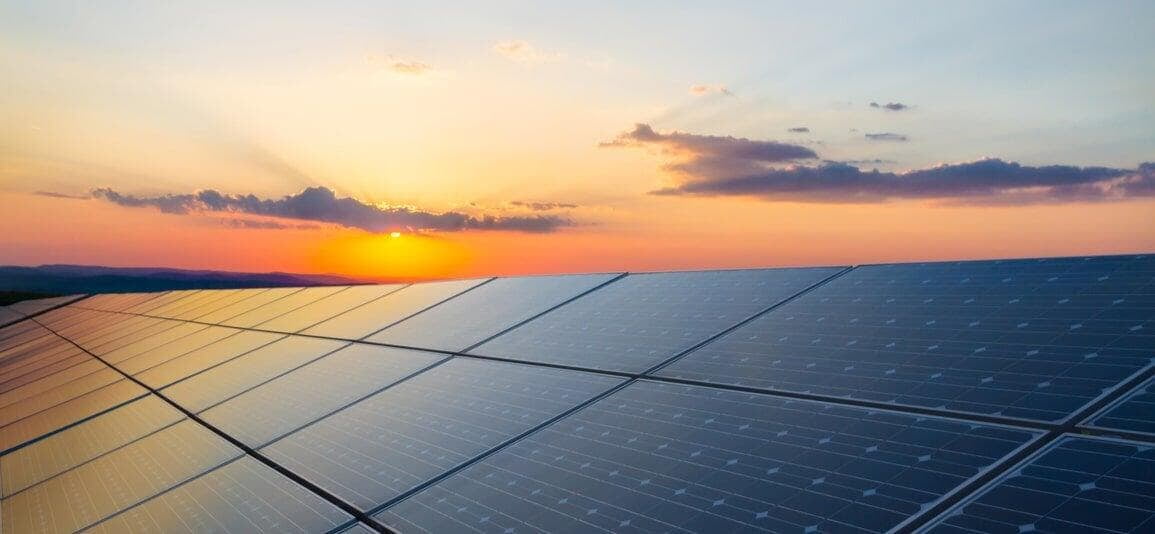
Boarding passes, shopping, meetings, payments — it's interesting how most things are digital these days. Even solar! ☀
Recently, I came across SundayGrids — they claim to make solar investments easy for those without a rooftop. They have approached it differently.
Business model
- SundayGrids partners with a host to install a solar plant in their premises;
- Investors "reserve" power generation from that project for 15 years;
- Power generated from that plant is sold to the host at a cheap(er), fixed rate for 15 years (PPA + BOT);
- These proceeds are repaid to investors, but in the form of "credits" (linked to actual energy production). Credits can be used by the investor to pay their own electricity bill! (payment via SundayGrid's portal)
- After 15 years, the host gets the plant for free (most panels have a life of 25 years).
How are the credits calculated?
- You reserve space in an available project;
- You're then allotted pro-rata rights of the power generated;
- You're paid ₹5.15 in credits for every unit kWh of energy produced by that project.
I took a trial of the Cosmos 145 project
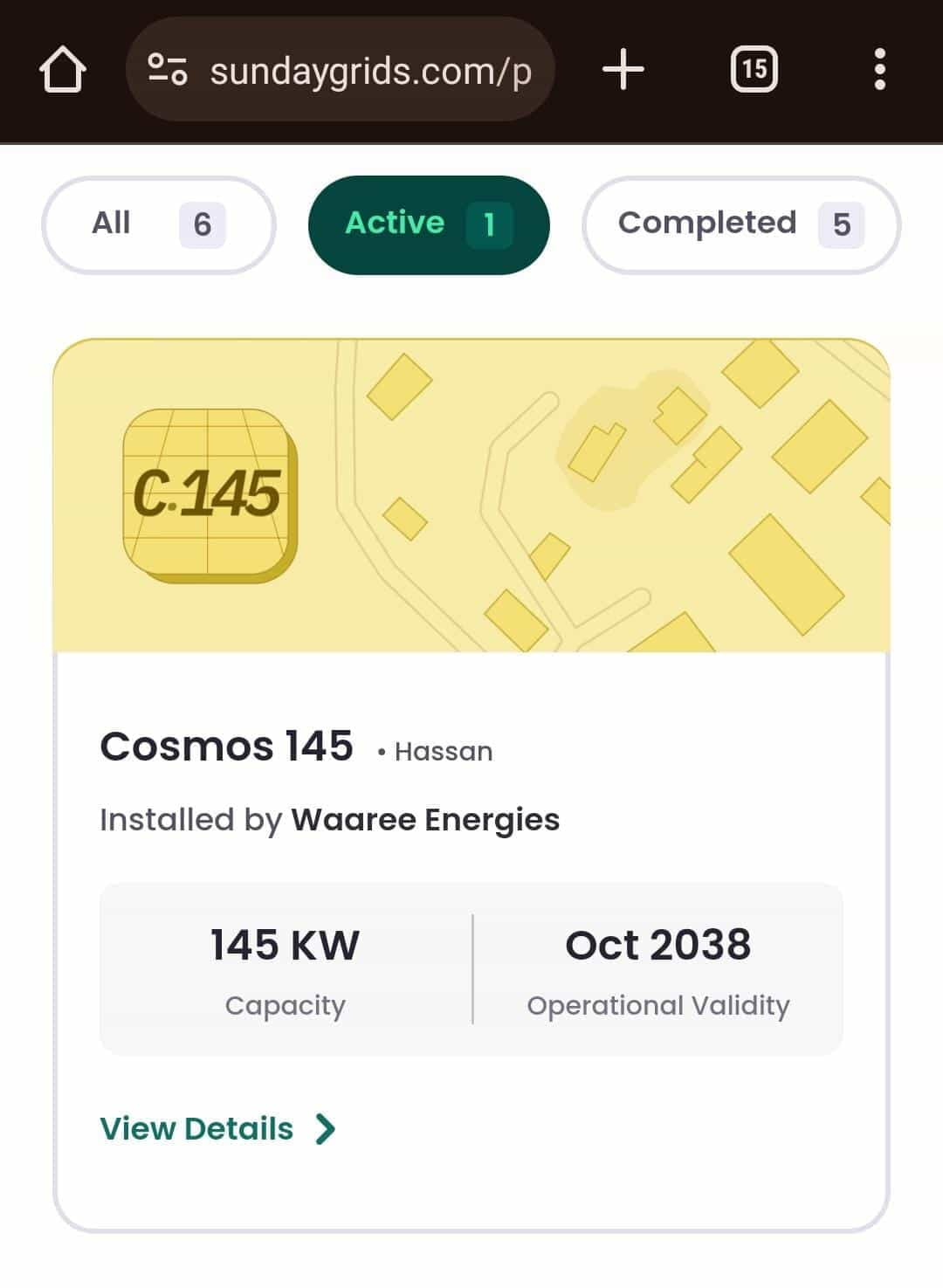
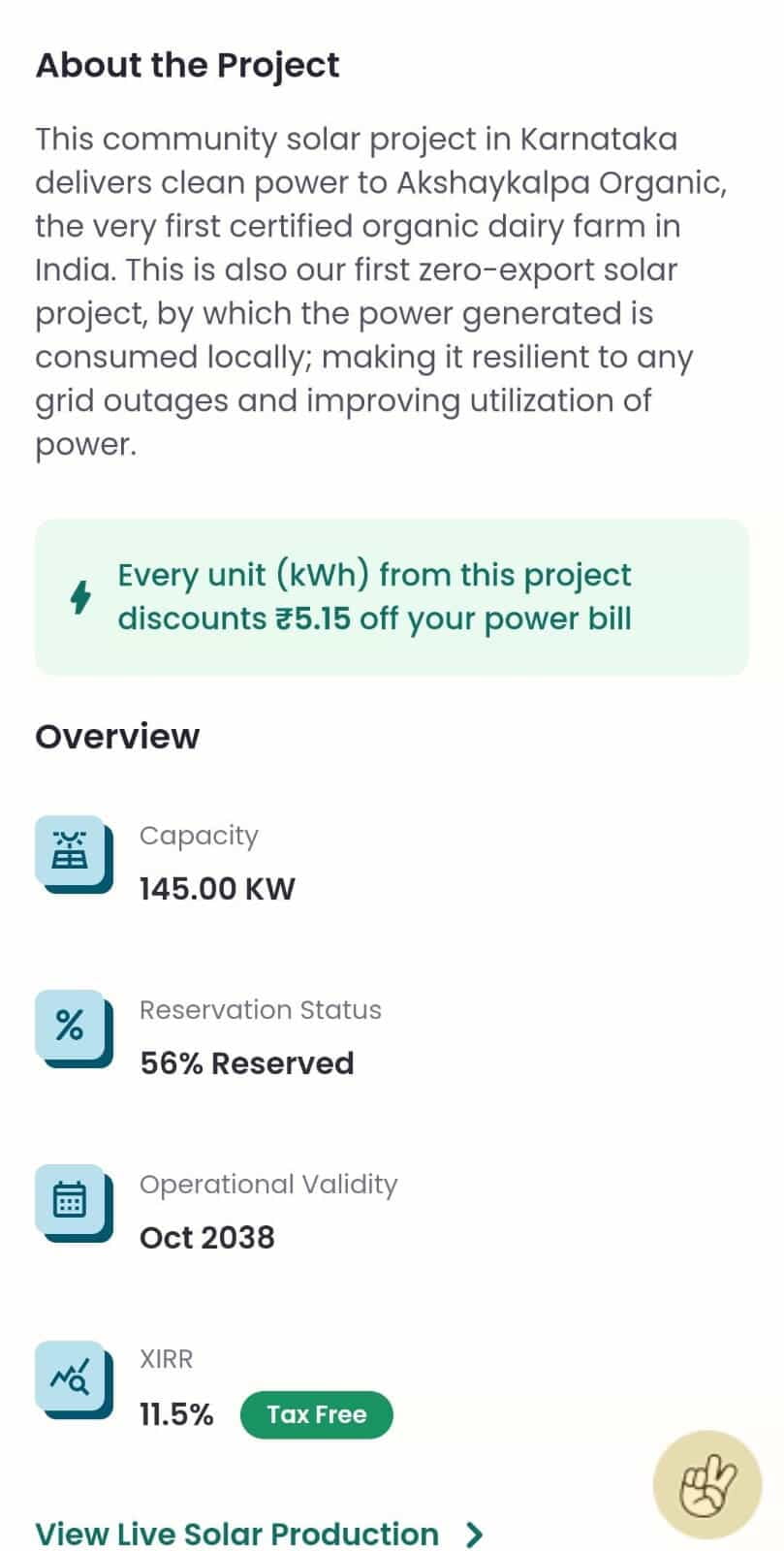
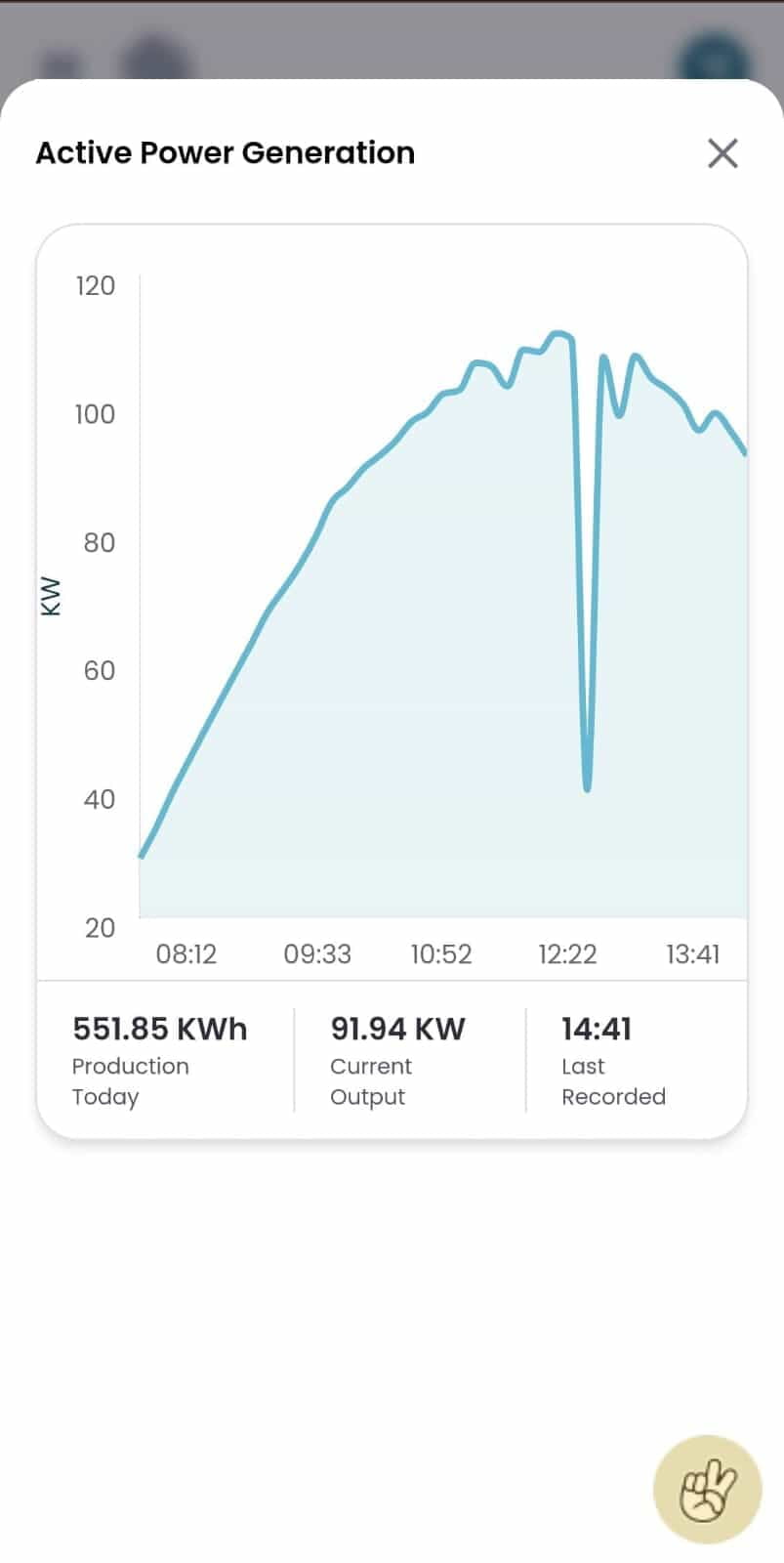
- I reserved 3277W at a reservation value of ₹1,60,000. The reservation is actually a one-time fee paid to SundayGrids rather than an SPV-investment structure.
- Anyway, thumb rule in India is 1000W of solar produces 4.5 units a day normalized across seasons. So we can estimate 3277W to produce 13–14 units a day.
- At ₹5.15 credits per unit, this is ₹2000 in monthly savings.
- Works out to a 12% IRR.
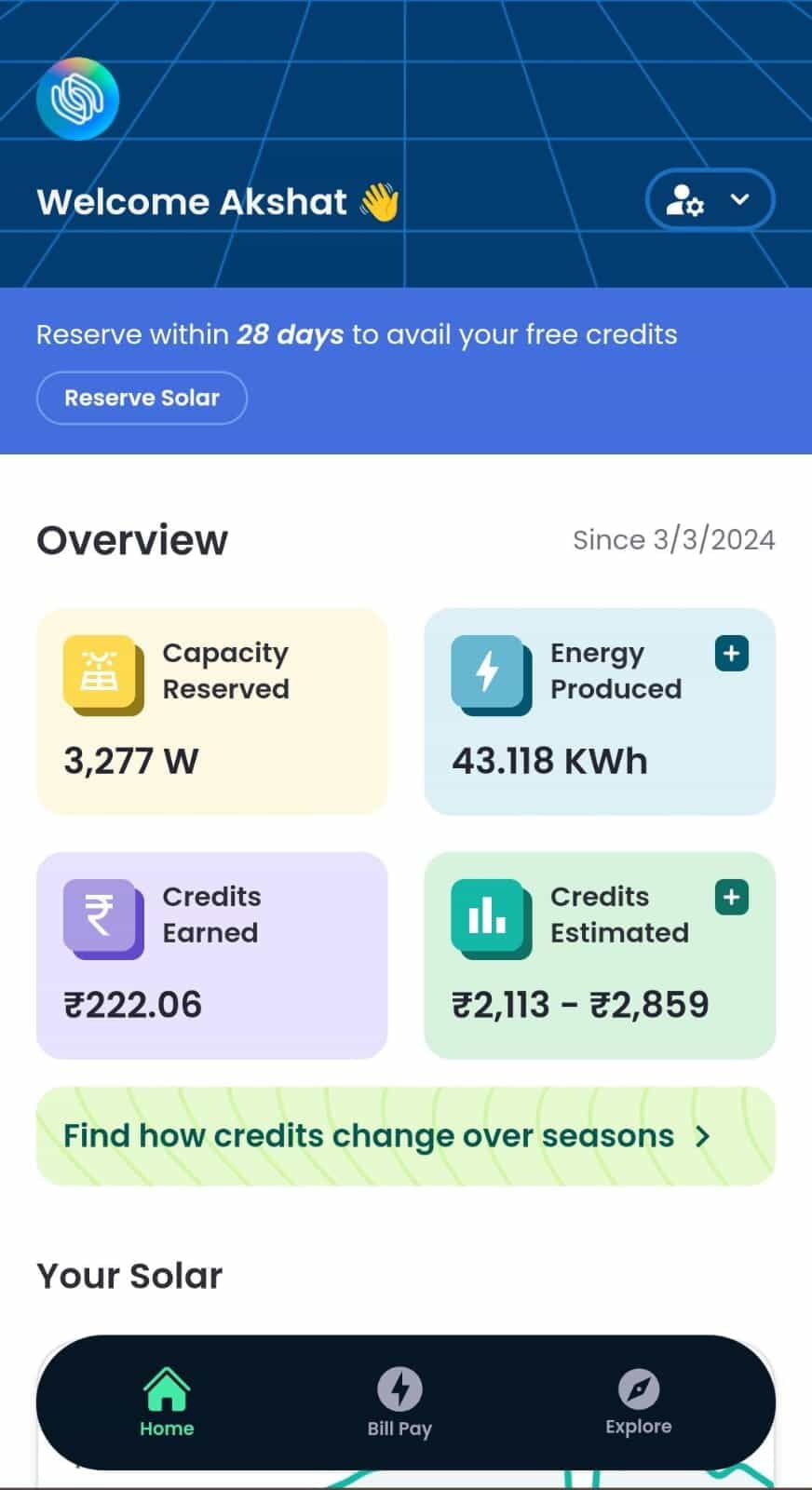
- I'm taking a look at my dashboard and it says in 2 days my Cosmos 145 reservation has produced 43 units & earned ₹226 in credits. They estimate this month's credits to be anywhere between ₹2100–2800. Not bad!
Benefits to the Host
- Cheap power without any CapEx;
- Zero maintenance costs for 15 years;
- Gets the plant free from year 16.
Benefits to the Investor
- Gets a neat 11–12% IRR. But the structure synthetically feels like a net metering arrangement;
- There's a tax angle too — since these credits are like a cashback, they are not liable to tax! They just have to pay their electricity bill via the SundayGrids portal (via BBPS) and apply the credits;
- The tax angle might make it slightly more lucrative compared to vanilla fractional solar financing opportunities which generally give a pre-tax IRR of 12–15%.
The risks
- This is not an SPV structure, so in case SundayGrids goes under, its assets (the solar plants) will also be liquidated. Ideally, such projects could be structured as an SPV to protect investors from liquidation events.
If SundayGrids can better address this risk, then they have a compelling solution for house owners to benefit from solar without the hassles of financing, installation, approvals and maintenance.
Getting paid from an international client?
If you've ever exported goods or services, you know it's not a smooth process — and you pay 5–10% in fees across layers. A cheaper, faster alternative.
Kishore Biyani's three Indias on a train
In a recent podcast, Kishore Biyani categorized India into three distinct segments based on consumption patterns. Reflections from the Jagriti Yatra.
Neuland Labs: a business set to enter flywheel mode or?
Notes on Neuland — a Hyderabad-based, pure-play API manufacturer — and whether its Specialty and CMS businesses are set to enter flywheel mode.