← All writing
Business Breakdowns
Notes from the CFA Society India session with Arun Veerappan of Pari Washington
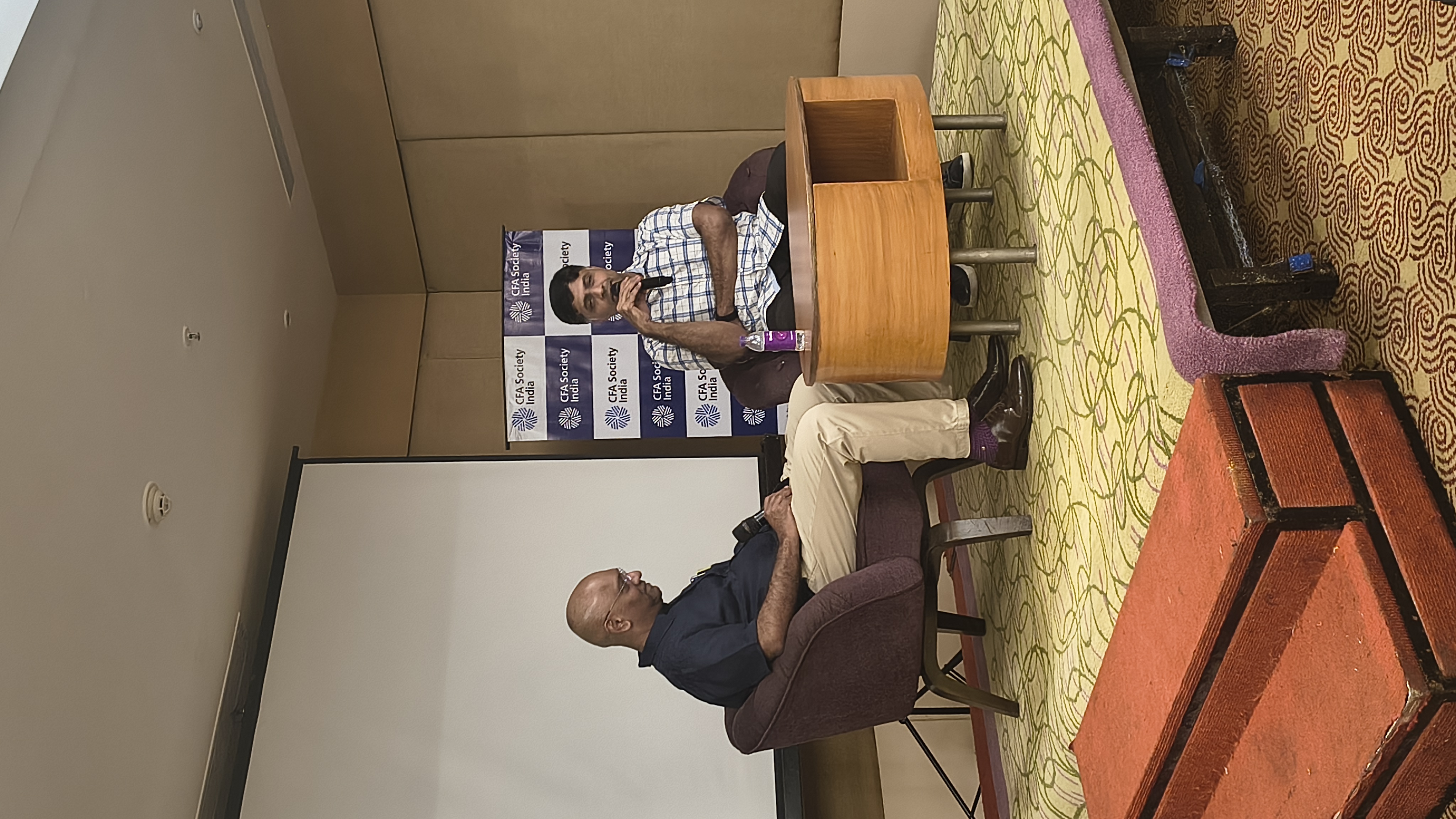
Meet the Market Masters by CFA Society India, Chennai Chapter
Arun Veerappan of Pari Washington
Hosted by Srivathsan of Avendus Spark Institutional Equities
Srivathsan: how did the journey happen from Madurai to US to Chennai?
Arun: Went to a boarding school in Rishi Valley, went to US, degrees in economics and engineering. 2nd stroke of luck - opp to work in a sell side I-bank.
US was a great place to begin a career then. The firm was in SF, was a high quality firm. We were involved in most of Silicon Valleys financings, I worked for great bosses. Both high quality, great at what they were doing.
Began as a Research Associate, then went on to become Managing Director.
But all this was sell side, I then changed to the other side - sponsored 4 semiconductor investments. One of the investee cos went from 0 to $100mn quickly but I barely made single digit IRR due to down rounds. I also had a small investment in a Indian tech company with some prop technology, and this was the one that gave the investments the good IRR.
Peeling the onion tells us this evolution, especially in VC investing.
I realised VC investing wasn't for me; I was agonizing about this. Someone introduced me to value investing and that's what's given me the direction since..
Came back to India in 2026, did Pari Washington and it's been a team sport since.
Naming of Pari Washington - Pari was a Tamil-ian. In the early Chola period, he said why should we be ruled by hereditary kings, we'll make a kingdom of our own. Unfortunately the kingdoms on the other hand defeated him.
Washington, in the US, also had a movement against Britain - the fighter surrounded himself with equals / betters like Benjamin Franklin and built institutions like Supreme Court, Congress etc and most importantly he quit at the top of his game (only 2 terms).
So every company starts as a Pari, few of them go on to become Washingtons. We're also looking for excellent businesses, run by excellent people at reasonable prices.
Srivathsan: Can you explain your thoughts process?
Arun:
1. Understanding - biz can generate cash but I need to understand the business.
2. Moat - we mean by Moat - we put the co at the center and we ask who has the leverage - suppliers, customers etc. Who is the price taker, who is the price setter and that tells a story.
3. Decision Making
4. Price - only if the above 3 work, then we do the modelling. We typically model for 9 years, not because I know where the biz is going to be 9 years from now, but because I can understand where the cashflows will evolve over a business cycle.
Srivathsan: your fund doesn't publish returns but your performance has been top quartile. Can you share more perspective on what's worked / what's not?
Arun: in hindsight, performance becomes beautiful stories but in reality, this is a lot of luck and work.
For example, one of our first buys was P&G - they were going to divest the detergent, manufacturing biz and going to retain Feminine Hygiene and Vicks. Very easy to understand the biz now.
Feminine Hygiene back then wasn't a need in 2006-07. Entire market size back then was just Rs. 600 crores. Only 10% of Indian women of apt age were using Sanitary Napkins. It was something that immediately appealed to us.
By the time we made our first investment was June 2007. This was the test of understanding the biz.
Now the test of moat: take Vicks - it's not very complex, buying a commodity, packaging it well, etc. For Female Hygiene, most of the vendors were American, Japanese etc - so back then they were only 2.5 players. The equipment that makes these products - mostly in US, Europe, etc. Indian govt put tariff on Chinese imports of end products so the company was in a good spot with the vendors.
Industry was majorly oligopolistic. But what we needed comfort on, was, understanding what P&G wants to do with these 2 businesses - because they just got rid of their manufacturing biz.
P&G USA was very receptive to our queries as a minority investor.
So with this we had our understanding, moat, decision making part answered. The biz was trading at 18x PE vs a 25x for Colgate HUL etc, it was a biz that Dalal Street wasn't interested in, but we really liked the cashflows. We kept buying and exited.
Now if the question is on selling - sell discipline.
It's not rocket science - a few things were happening - this is a biz that despite giving 5% royalty and 2% biz processing fee to the parent. Despite this they were making 25-30% margins. A lesson we learnt is when a biz allows such a margin structure to exist, it invites competition. Market share started to fall and P&G wasn't responding. The hungry, paranoid player typically will want to kill emerging competition but this wasn't happening.
Srivathsan: Thanks! Can you also tell us one that didn't work?
Arun: 2011 we bought Dainik Bhaskar and Jagran Prakashan. Largest newspapers in vernacular languages.
(Arun shows an iPhone 13, saying don't buy latest iPhones, look for n-6 in depreciating assets)
When Jobs launched the iPhone, Arun would try and see which language the iPhone keyboards would be in..
The newspaper industry was widely distributed and we understood the Industry.
Moat - the equipment, the paper suppliers, vendors, etc they were well protected. From customer pov, they didn't make much money on the subscription side but 2/3 of the biz was advertising.
We felt although newspaper was a sunset biz in US, but it had a moat in India.
The DB group, Rameshchandra Agarwal, very nice family, very strong in west. Similarly, Jagran was strong in UP Delhi etc. So a duopoly structure, 30% margin biz, 1.5 asset turns, but unlike PG this was a +ve working capital biz. DB still made 25% Return on Capital.
We invested in 2011, we had a decent entry price at 200, we sold in 2017 at 2x with some dividends. Not great but no complaints. But the mistake we made here was we were aware of the shrinking market.
DB wasn't a place I went wrong. I went wrong with Jagran.
Jagran was reporting reasonable numbers in 2017 elections - so we felt that national elections aren't too far away, so let's ride this longer. In this short time, we lost. We had bought it at 90, sold eventually at 70. So in the newspaper cohort we had substandard returns. We misunderstood how quickly technology pervades and the 2nd was the greed - I can run this longer.
Srivathsan: Like we say in sell-side, one more earnings season and then it comes to haunt you.
Also, what's next at Pari Washington - you've managed for large institutions, endowments etc.. what's next?
Arun: I think it's time for us to build our India biz, we've now applied for a mutual fund license.
Srivathsan: Q&A
Question: If you're taking weeks to months to do due diligence, how do you react if things change in between?
Arun: We are OK to pass. No pressure. But also - There are many businesses which we cover for years before we make our first investment. So even if a new company comes up, most of the ecosystem is already in place - we know the industry, the vendors etc. One process we have is, if you do any plant visits, we don't do handwritten notes. All the meeting notes go into a server and we have institutional memory.
Question: Opinions on ai?
Arun: I don't know where it's going - if you start at the top, the LLMs and investable options don't exist for India - so you go one step below - the equipment for semiconductors - we're full of semiconductor designers, but most of them work for MNCs, not public market cos. If you look at wafer fabrication etc, it's very early stage for India. I wouldn't have bet 25 years ago that 25 years later we'll have driverless cars.
So in short - I don't know, your guess is as good as mine.
Question: You said it's not just about the stock selection, can you throw light on portfolio construction?
Arun: We rate every stock for biz quality (moat, management, etc) and biz momentum (nothing to do with the stock), more on 3 year cash flows.
In this the A grade biz come seldom, and when they do, they're not priced well. I won't do much on a B investment. I've made best returns when I invest in a B+ company that can become a A business.
Last piece is our own intuition, our own gut.
This is how we decide portfolio sizing..
More writing
№ 08Business Breakdowns
Digital…. Solar?
It's interesting how most things are digital these days — even solar. A look at SundayGrids and how it lets you invest in solar without a rooftop.
08 Mar 2024
↗
№ 07Business Breakdowns
Getting paid from an international client?
If you've ever exported goods or services, you know it's not a smooth process — and you pay 5–10% in fees across layers. A cheaper, faster alternative.
08 Mar 2024
↗
№ 06Travel
Kishore Biyani's three Indias on a train
In a recent podcast, Kishore Biyani categorized India into three distinct segments based on consumption patterns. Reflections from the Jagriti Yatra.
21 May 2023
↗